
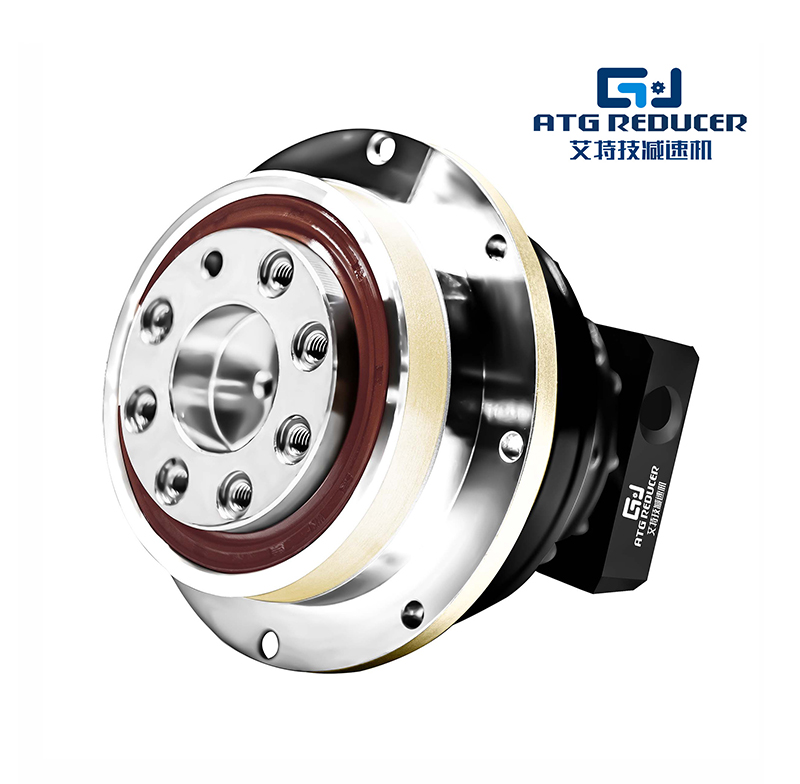
ATG gear reducer noise and vibration troubleshooting is an essential topic for engineers, maintenance teams, and equipment operators who want to improve gearbox performance, extend service life, and reduce unexpected downtime. In industrial motion systems, a gear reducer plays a critical role in controlling speed, increasing torque, and supporting stable power transmission. When abnormal noise or vibration appears, it often indicates mechanical wear, misalignment, lubrication problems, installation errors, or load issues that should be addressed early.
This page provides original, SEO-friendly, industry-generic information about gear reducer noise and vibration troubleshooting. It is designed for use in blog articles, category pages, technical resource pages, and industrial directory pages. The content focuses on definitions, benefits, symptoms, common causes, inspection methods, corrective actions, and reference specifications. No specific company recommendations are included.
An ATG gear reducer is a type of mechanical speed reduction device used to lower input speed and increase output torque in industrial applications. It is commonly used in conveyors, mixers, packaging machines, lifting systems, automation lines, and other power transmission equipment. Depending on the design, an ATG gear reducer may include helical gears, bevel gears, worm gears, or planetary gear sets.
In practical use, a gear reducer must operate with stable rotation, controlled backlash, proper lubrication, and low mechanical resistance. When noise and vibration increase beyond normal levels, the system may become less efficient, less reliable, and more expensive to maintain. For this reason, ATG gear reducer noise and vibration troubleshooting is a key part of predictive maintenance and equipment health management.
Noise and vibration are two of the most common early warning signs of gearbox problems. While some sound and vibration are normal during operation, unusual changes often indicate a fault. If ignored, these symptoms can lead to tooth wear, bearing damage, lubricant failure, shaft misalignment, seal leakage, overheating, and even complete gear reducer failure.
From an operational standpoint, reducing gear reducer noise and vibration can improve worker comfort, protect surrounding equipment, increase machine accuracy, and support longer service intervals. In many industrial environments, lower vibration also helps prevent damage to motors, couplings, foundations, and driven loads.
| Benefit Area | Impact of Lower Noise and Vibration |
|---|---|
| Equipment Life | Reduced wear on gears, bearings, seals, and shafts |
| Energy Efficiency | Lower mechanical losses and improved transmission stability |
| Maintenance Cost | Fewer unplanned repairs and less frequent major overhauls |
| Production Stability | More consistent speed and torque output |
| Safety and Comfort | Less operator fatigue and lower risk of secondary damage |
Before troubleshooting an ATG gear reducer, it is important to identify the symptom pattern. Different sounds and vibration behaviors often point to different mechanical conditions. Common symptoms include whining, grinding, rattling, knocking, humming, cyclic vibration, temperature rise, oil leakage, and irregular output motion.
| Symptom | Possible Meaning |
|---|---|
| Whining noise | Gear mesh issue, lubrication shortage, or high operating speed |
| Grinding sound | Severe wear, contamination, or damaged gear teeth |
| Rattling or knocking | Loose mounting, backlash problems, or worn components |
| Low-frequency vibration | Imbalance, alignment error, or foundation problem |
| High-temperature operation | Lubrication failure, overload, or internal friction |
| Oil leakage | Seal damage, pressure buildup, or housing wear |
There are many possible reasons for gearbox noise and vibration. In most cases, the root cause is not a single factor but a combination of installation, operation, lubrication, and mechanical wear issues. Below are the most common causes in industrial gear reducer systems.
Misalignment between the motor, coupling, and gear reducer shaft is one of the leading causes of vibration. Even small alignment errors can create radial load, axial stress, uneven gear contact, and premature bearing wear. Misalignment can result from poor installation, foundation settling, thermal expansion, or coupling damage.
Gear reducers depend on the correct lubricant type, viscosity, and oil level to reduce friction and dissipate heat. If the oil level is too low, too high, contaminated, or not suitable for the application, the gearbox may produce noise, vibration, and overheating. Lubrication failure can also accelerate pitting and scoring on gear teeth.
Worn, chipped, cracked, or pitted gear teeth create irregular contact patterns that increase vibration and acoustic noise. Over time, these defects may spread across the gear mesh and reduce torque transmission efficiency. Gear damage is often caused by overload, poor lubrication, contamination, or long-term fatigue.
Bearings support the rotating shafts inside the gear reducer. If a bearing is worn, loose, improperly installed, or contaminated, it can create humming, clicking, or rumbling sounds. Bearing defects often show up as vibration peaks at specific frequencies.
A gear reducer must be mounted securely on a stable base. Loose bolts, weak support structures, or uneven foundations can amplify vibration and create resonance. This is especially common in heavy-duty industrial systems exposed to continuous operation.
When a reducer is subjected to torque beyond its design limits, internal components may deflect or wear faster. Sudden load changes, jammed conveyors, frequent starts and stops, and impact loads can all increase noise and vibration levels.
Dust, metal particles, water, and other contaminants can enter the gearbox through seals or maintenance openings. Contaminated lubricant loses its ability to protect gear teeth and bearings, leading to abrasion, corrosion, and abnormal sound.
Backlash is the small clearance between meshing gear teeth. Too little backlash may cause binding and heat buildup, while too much backlash can create impact noise and vibration. Correct gear mesh is essential for smooth operation.
Bent shafts, eccentric components, or unbalanced rotating parts can produce repeated vibration patterns. These conditions often worsen as rotational speed increases.
A structured troubleshooting process helps identify the root cause faster and avoids unnecessary component replacement. The following step-by-step method is suitable for industrial maintenance teams handling gear reducer noise and vibration problems.
Begin by checking when the noise or vibration occurs. Does it happen during startup, under load, at specific speeds, or continuously? Understanding the operating pattern helps narrow the diagnosis. Record input speed, output speed, load level, temperature, and duty cycle.
Examine the housing, seals, mounting bolts, foundation, coupling, and surrounding structure. Look for cracks, oil leaks, looseness, unusual movement, and surface damage. Many vibration problems can be traced to external installation issues.
Verify oil level, oil condition, and oil type. If the lubricant appears dark, foamy, milky, or contains metal particles, internal wear or contamination may be present. Replace or analyze the oil if necessary.
Use human observation or acoustic tools to determine whether the noise is high-pitched, low-pitched, intermittent, rhythmic, or continuous. Specific noise patterns can indicate gear mesh issues, bearing defects, or loose parts.
Use vibration monitoring equipment to measure amplitude, frequency, and direction. Compare the readings with baseline data, if available. A significant increase from normal operating levels suggests a mechanical problem that needs attention.
Check the alignment between the motor, coupling, and reducer shaft. Misalignment is a common source of vibration and should be corrected with proper tools and procedures.
Ensure the gear reducer is sized correctly for the application. If the reducer is frequently overloaded, the system may require load reduction, duty cycle adjustment, or a design review.
If external checks do not reveal the cause, the gearbox may need to be opened for internal inspection. Examine gears, bearings, shafts, seals, and housing surfaces for wear, pitting, spalling, cracking, and contamination.
| Problem Area | Possible Cause | Recommended Action |
|---|---|---|
| High-pitched whining | Poor lubrication, gear mesh issue, or speed resonance | Check oil condition, verify mesh pattern, review operating speed |
| Grinding noise | Gear tooth damage or contaminated lubricant | Inspect gears, replace oil, remove contamination source |
| Rumbling vibration | Bearing wear or bearing contamination | Inspect and replace bearings if needed |
| Knocking sound | Loose mounting, excessive backlash, or broken component | Tighten mounts, check backlash, inspect internal parts |
| Heat buildup | Overload, friction, or lubrication failure | Reduce load, correct lubrication, inspect friction points |
| Oil leakage | Seal damage or housing pressure issues | Replace seals, inspect venting and housing condition |
| Cyclic vibration | Eccentricity, imbalance, or gear defect | Measure runout, inspect rotating elements, rebalance if necessary |
Effective gear reducer troubleshooting often combines basic visual inspection with more advanced diagnostic methods. The best approach depends on the severity of the symptoms and the criticality of the equipment.
Visual inspection is the first and simplest step. Check for oil leaks, loose bolts, discoloration, shaft movement, damaged seals, and unusual wear marks. Surface clues can reveal major internal problems.
A trained technician can often identify abnormal gearbox conditions by sound. Changes in pitch, rhythm, or intensity may help distinguish between gear mesh noise, bearing failure, or lubrication problems.
Excessive heat often accompanies friction, misalignment, or load overload. Temperature readings can be taken using contact sensors, infrared tools, or built-in monitoring systems.
Vibration analysis is one of the most valuable tools for gear reducer diagnosis. It can detect imbalance, misalignment, looseness, gear tooth defects, and bearing faults before catastrophic failure occurs.
Lubricant analysis can reveal wear particles, contamination, oxidation, water ingress, and viscosity breakdown. Oil analysis is especially useful in predictive maintenance programs.
Where internal access is limited, a borescope can be used to inspect gear teeth, bearing surfaces, and housing conditions without complete disassembly.
Preventing noise and vibration is more efficient than repairing damage after failure. The following best practices help maintain smooth reducer operation and improve long-term reliability.
The exact technical specifications of an ATG gear reducer vary by model, ratio, application, and mounting arrangement. However, the following reference table shows common specification categories used when evaluating industrial gear reducers for noise and vibration performance.
| Specification Category | Typical Evaluation Point | Why It Matters |
|---|---|---|
| Gear Type | Helical, bevel, worm, planetary | Affects efficiency, noise level, and load distribution |
| Reduction Ratio | Single-stage or multi-stage ratio | Influences output torque and speed behavior |
| Input Speed | Rated motor speed | Too high or unstable speed can increase noise |
| Output Torque | Rated torque capacity | Overload can cause vibration and wear |
| Backlash | Allowable gear clearance | Too much or too little backlash affects smoothness |
| Noise Level | dB level under standard conditions | Used for compliance and comparison |
| Vibration Level | Velocity or acceleration measurement | Indicates mechanical condition |
| Lubricant Type | Mineral oil, synthetic oil, grease | Directly affects heat and wear control |
| Mounting Style | Foot, flange, shaft-mounted | Impacts alignment and vibration behavior |
| Protection Level | Seal and enclosure design | Affects contamination resistance |
Maintaining a gear reducer in good condition offers multiple operational advantages. These benefits are especially important in continuous production environments where downtime is expensive and performance consistency matters.
| Maintenance Advantage | Practical Result |
|---|---|
| Extended service life | Reduced component replacement frequency |
| Lower vibration | Smoother machine operation and less structural stress |
| Reduced noise | Improved workplace environment |
| Better efficiency | Less energy loss in transmission |
| Predictable performance | Stable speed and torque output over time |
| Fewer emergency repairs | Lower maintenance cost and less downtime |
For content planning, product category optimization, and search visibility, the following keyword themes are highly relevant. These terms can help support topical authority in industrial gearbox content without referencing any specific company.
The first step is to confirm when the noise occurs and inspect the external condition of the reducer, including mounting bolts, lubrication level, seals, and coupling alignment.
Yes. Incorrect oil type, low oil level, contaminated lubricant, or degraded oil can all contribute to increased noise, heat, and vibration.
Not always, but abnormal vibration should never be ignored. It can be an early indicator of alignment issues, looseness, or internal wear.
Inspection frequency depends on operating conditions, load, environment, and criticality. Many industrial systems benefit from routine visual checks and scheduled vibration monitoring.
Noise under load may indicate gear mesh problems, overload, bearing stress, or lubrication limitations. Load-based testing can help isolate the issue.
ATG gear reducer noise and vibration troubleshooting is a practical and necessary process for maintaining stable industrial performance. By identifying symptoms early, checking alignment, verifying lubrication, measuring vibration, and inspecting internal components when needed, maintenance teams can reduce the risk of failure and improve equipment reliability.
Whether used in a blog post, technical resource page, or industrial directory page, this information supports SEO-friendly content creation around gear reducer noise, vibration analysis, and troubleshooting best practices. Consistent maintenance, accurate diagnosis, and timely corrective action remain the most effective ways to keep a gear reducer operating smoothly.
```
Trang web này sử dụng cookie để đảm bảo bạn có được trải nghiệm tốt nhất trên trang web của chúng tôi.

 Chinese
 EN
EN Español
 Pусский
 Deutsch



 Điện thoại
Bình luận
(0)