
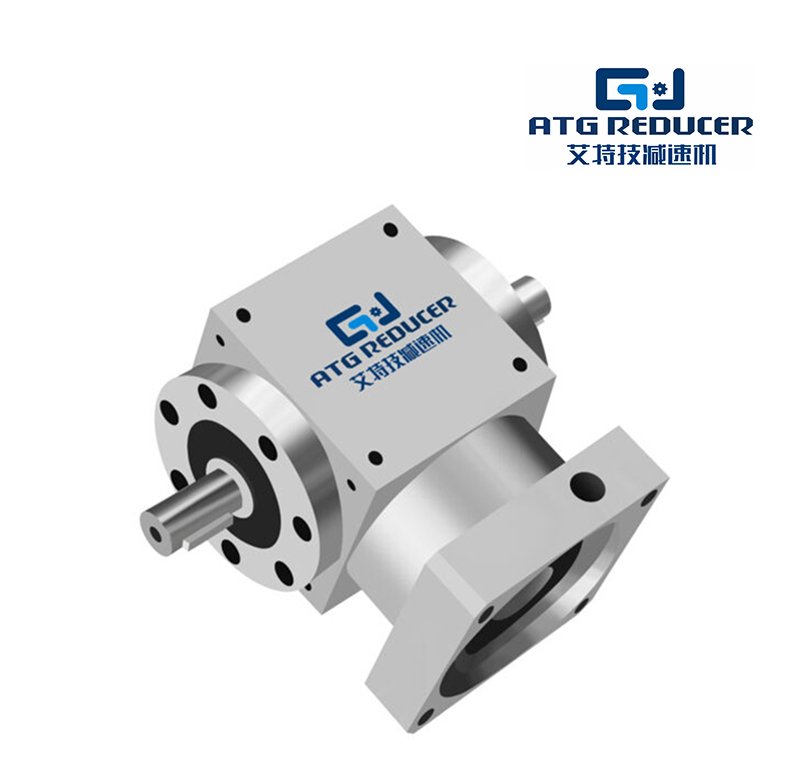
A hollow rotary platform is a precision rotation system designed with a central through-hole, also called a hollow bore, to allow cables, air lines, shafts, fluid tubing, fiber optics, or other components to pass through the center of the rotary axis. In industrial automation, robotics, inspection systems, packaging equipment, semiconductor tooling, and custom machinery, the hollow bore size is one of the most important selection criteria because it directly affects system integration, routing flexibility, load handling, and installation efficiency.
This Hollow Rotary Platform Hollow Bore Size Guide provides general industry information, terminology, size considerations, dimensional comparisons, selection factors, and specification references. It is written for SEO use, blog publishing, industry pages, catalog pages, and product category pages. The content below is intentionally brand-neutral and focuses on universal knowledge only.
A hollow rotary platform is a rotary device or rotating stage that contains a central opening through the rotation axis. Unlike a solid rotary stage, the hollow design allows passage through the center of the unit. This makes it especially valuable where rotating motion must coexist with internal routing needs.
The hollow bore can be used for:
Because the bore is located at the center, engineers can simplify machine layout, reduce external clutter, improve protection for routed utilities, and increase the overall compactness of the design. For many applications, the hollow bore is not just a convenience; it is a functional requirement.
The hollow bore size affects mechanical compatibility, cable management, rotating clearance, and system integration. Choosing the correct bore diameter helps ensure that all internal components fit safely without interfering with the rotation mechanism.
Key reasons hollow bore size matters include:
In practical engineering, hollow bore size should always be selected based on both current requirements and any expected future needs. Undersizing the bore can cause installation problems, while oversizing may increase cost or affect structural design.
When evaluating a hollow rotary platform, it helps to understand the most common terms used in specification sheets and technical discussions.
| Term | Meaning | Why It Matters |
|---|---|---|
| Hollow bore | The central opening through the rotary axis | Determines what can pass through the center |
| Through-hole | A hole that goes fully through the platform body | Allows full-length routing or shaft passage |
| Inner diameter (ID) | The inside diameter of the hollow section | Usually the most important bore dimension |
| Outer diameter (OD) | The overall diameter of the rotary platform | Impacts load capacity and footprint |
| Rotary table | A rotating platform used for positioning or indexing | May be solid or hollow depending on design |
| Through-bore rotary stage | A rotary stage with a center opening | Common in automation and precision machinery |
| Cable routing clearance | Space reserved for internal wiring or tubing | Prevents interference with moving parts |
Hollow rotary platform bore sizes vary widely depending on platform diameter, load class, torque requirements, and application type. Smaller units may have modest internal openings, while larger industrial systems may support much larger through-holes.
The following table provides a general industry-style reference for common hollow bore size ranges. These are not exact product standards, but useful guide values for planning and comparison.
| Platform Size Category | Typical Hollow Bore Range | Common Use Cases |
|---|---|---|
| Mini / Compact | 5 mm to 20 mm | Light automation, sensors, compact inspection devices |
| Small | 20 mm to 50 mm | Light-duty automation, small cable bundles, compact indexing |
| Medium | 50 mm to 100 mm | General machine integration, multi-line routing, robot fixtures |
| Large | 100 mm to 200 mm | Heavy equipment integration, larger shafts, complex utility routing |
| Extra-Large | 200 mm and above | Specialized industrial systems, high-capacity pass-through applications |
In many industrial designs, the bore diameter is chosen to match the largest object that must pass through the center, plus additional clearance for movement, thermal expansion, connector housings, and installation tolerances.
Selecting the right hollow bore size is a balance of mechanical compatibility, routing needs, and platform performance. The following factors are commonly evaluated during engineering selection.
The first question is simple: what needs to pass through the hollow center? The answer could be a cable bundle, a rotating shaft, a pneumatic hose, an optical line, or several utilities at once. The bore must be larger than the maximum outside diameter of the routed component, with enough additional space for installation and motion.
Clearance is essential. A cable or tube may fit through a bore on paper, but real installations need room for bends, connector heads, strain relief, and movement during rotation. Engineers often allow extra clearance to reduce wear and avoid pinch points.
Increasing the bore size can reduce available material in the center section. Depending on the design, this may affect stiffness, torsional resistance, and load distribution. A larger bore should be evaluated alongside the total load, moment load, and required service life of the platform.
Some systems require high-speed continuous rotation; others need slow indexing or precise positioning. Bore size may influence bearing arrangement, rigidity, and overall dynamic performance. The selection must support the intended speed, accuracy, and duty cycle.
Machine envelope, mounting style, adjoining parts, and maintenance access all affect the ideal bore size. If the platform must fit into a compact assembly, the bore must be sufficient without unnecessarily increasing the product footprint.
In automation projects, it is often wise to allow extra capacity for future sensors, additional wiring, or upgraded pneumatic lines. A slightly larger bore may provide better long-term flexibility, provided it does not compromise other performance needs.
In general, larger rotary platforms can support larger hollow bores. However, there is no universal one-to-one relationship because the ratio depends on structural design, material selection, bearing arrangement, and intended load.
As a rule of thumb:
When comparing models, it is important to review both the hollow bore diameter and the usable internal passage length. A large opening that is too short, tapered, or obstructed may not work for longer connectors or shafts.
In addition to bore size, several other specifications are commonly listed for hollow rotary platforms. These values help buyers and engineers evaluate suitability for a given application.
| Specification | What It Describes | Why It Is Important |
|---|---|---|
| Hollow bore diameter | Size of the center opening | Determines pass-through capacity |
| Platform outer diameter | Total body diameter | Affects installation size and structural capacity |
| Load capacity | Maximum supported weight or moment load | Critical for safe operation |
| Angular travel | Rotation range or full 360-degree rotation | Defines motion capability |
| Positioning accuracy | Precision of rotation angle placement | Important for robotics and indexing |
| Repeatability | Ability to return to the same position | Essential for precision manufacturing |
| Maximum speed | Rotational speed limit | Affects productivity and dynamic behavior |
| Drive method | Gear, direct drive, belt, motorized, or manual | Influences performance and maintenance |
| Mounting style | How the platform is installed | Impacts integration and alignment |
Hollow rotary platforms are used across a wide range of industries because the center passage solves practical engineering problems. Typical applications include:
In each of these applications, the bore size affects not only whether the system can be assembled, but also how easily it can be maintained, expanded, and operated over time.
A larger hollow bore can offer several practical benefits, but it should always be weighed against structural and cost considerations. The most common advantages include:
However, a larger bore is not always better. Excessive bore size may reduce strength, increase cost, or make the unit larger than necessary. The best choice is the smallest size that fully meets the application requirement with adequate safety margin.
Choosing the wrong bore size can create performance and installation issues. Both undersizing and oversizing have drawbacks.
| Issue | Undersized Bore | Oversized Bore |
|---|---|---|
| Fit | Components may not pass through | May exceed practical needs |
| Installation | Difficult or impossible routing | May require larger machine envelope |
| Performance | Potential interference or wear | Possible reduction in rigidity |
| Cost | May lead to redesign or rework | May increase product and system cost |
| Maintenance | Harder to service or replace routing | Potentially more complex structure |
To avoid these problems, the bore should be selected with measured dimensions, connector clearance, bend radius, and motion allowance in mind. Real-world engineering rarely relies on nominal size alone.
Accurate measurement is essential when specifying a hollow rotary platform. The most important dimension is usually the inner diameter, but related measurements also matter.
For best results, engineers often create a routing diagram before selecting a bore size. This helps determine whether the center opening is adequate for both current and future requirements.
The following checklist can be used as a general guide when choosing a hollow rotary platform hollow bore size.
| Checklist Item | Question to Ask |
|---|---|
| Utility type | Will cables, hoses, shafts, or multiple items pass through? |
| Largest outside diameter | What is the largest object size including connectors? |
| Required clearance | How much extra space is needed for safe passage? |
| Rotation motion | Will the part rotate continuously or index intermittently? |
| Load requirement | Does the bore size affect the necessary strength? |
| Installation space | Is there enough room for the full platform and accessories? |
| Future expansion | May extra lines or larger components be added later? |
| Maintenance access | Can the routed components be inspected and replaced easily? |
Although exact dimensions differ by product class, the following examples show how hollow bore size is often discussed in practical applications.
| Example Category | Illustrative Bore Use | Typical Application Focus |
|---|---|---|
| 10 mm class | Single cable or small sensor line | Compact equipment and light automation |
| 25 mm class | Small cable bundle or narrow tube routing | General-purpose machines |
| 50 mm class | Multiple wires, tubing, or modest shaft pass-through | Automation cells and indexing modules |
| 80 mm class | Broader utility routing with added clearance | Advanced machine integration |
| 100 mm+ class | Large bundle routing or larger mechanical passage | Heavy-duty systems and custom assemblies |
These illustrative categories are useful for SEO content, catalog language, and general buyer education. Actual product selection should always be based on the engineering drawing and the technical specification sheet.
The bore size should also be considered in relation to the material and structural design of the rotary platform. Different constructions can change how much opening is practical while maintaining strength and precision.
Common design considerations include:
In high-precision equipment, bore geometry may be machined carefully to maintain concentricity and reduce runout. This is especially important where the routed object must stay aligned with the rotary axis.
For industry buyers, automation engineers, and technical spec readers, the hollow bore size of a hollow rotary platform is one of the most important factors in selecting the right rotating solution. The bore determines what can pass through the center, how cleanly utilities can be routed, how compact the machine can be, and how easily the system can be assembled and maintained.
When researching hollow rotary platform hollow bore size, consider these core points:
For optimized performance and long service life, always match the bore size to the actual application requirement rather than selecting by appearance alone. A properly chosen hollow bore can improve system integration, reduce clutter, and support reliable rotary motion in a wide range of industrial applications.
A hollow rotary platform with the right hollow bore size can significantly improve automation design, utility routing, and installation efficiency. Whether the application involves compact equipment or large industrial machinery, the bore must be sized carefully to accommodate everything that passes through the center while preserving the platform’s mechanical performance.
Use this guide as a general reference for understanding hollow bore terminology, typical size ranges, selection criteria, and specification comparison. For any real project, always verify dimensions, load requirements, and compatibility using the full technical drawings and engineering constraints of the system.
Keyword focus: hollow rotary platform hollow bore size, hollow bore diameter, through-hole rotary stage, rotary platform size guide, hollow rotary table, rotary stage bore dimensions, industrial rotary platform, bore selection guide.
Trang web này sử dụng cookie để đảm bảo bạn có được trải nghiệm tốt nhất trên trang web của chúng tôi.

 Chinese
 EN
EN Español
 Pусский
 Deutsch



 Điện thoại
Bình luận
(0)