
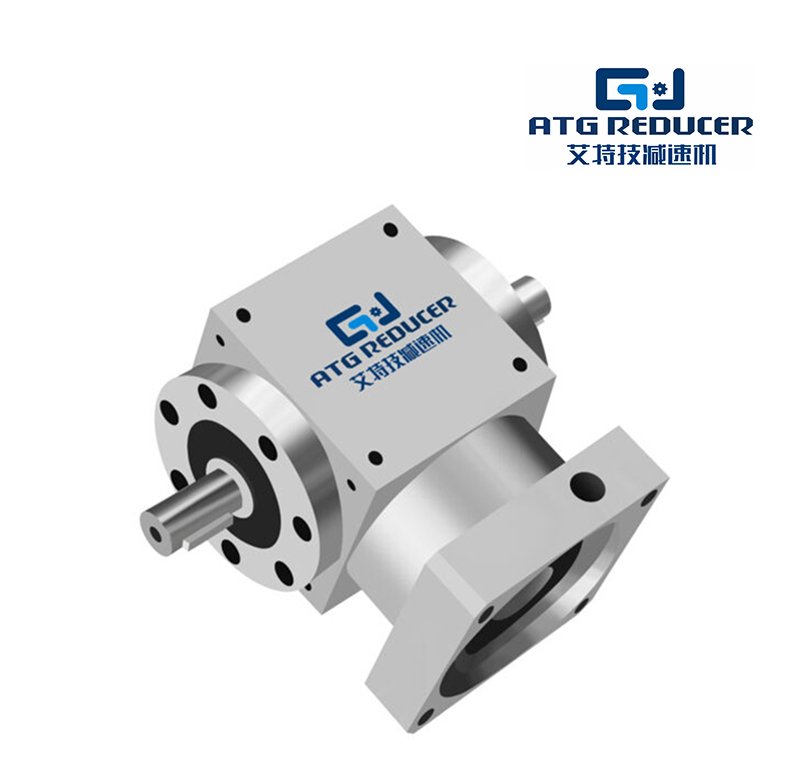
An ATG gear reducer is a type of industrial speed reduction gearbox designed to lower motor speed while increasing output torque for demanding mechanical applications. In simple terms, an ATG gear reducer helps a driven machine operate at the correct speed and with the right amount of force. This makes it an essential component in automation systems, conveyor lines, heavy equipment, packaging machinery, material handling systems, and many other industrial environments.
In modern industry, the term ATG gear reducer is often searched by buyers, engineers, and maintenance teams who need reliable gear reduction, stable transmission performance, and long service life. Whether used as part of a factory drive system or a standalone motion control solution, a gear reducer plays a critical role in matching motor output to real-world load requirements. This article explains what an ATG gear reducer is, how it works, its main advantages, common types, typical specifications, and key selection factors.
An ATG gear reducer is a mechanical power transmission device that reduces rotational speed and increases torque through a gear train. The input shaft receives power from a motor or engine, and the internal gears convert that high-speed, low-torque input into a lower-speed, higher-torque output. This process is known as gear reduction.
The phrase ATG gear reducer may be used in industrial search contexts to describe a class of gearboxes or reduction units that are widely applied in automation and transmission systems. In general usage, it refers to a compact, efficient reducer built to handle continuous operation, precise motion transfer, and stable load performance.
A gear reducer is not simply about slowing motion down. It also improves system control, protects motors from overload, and helps machinery operate within optimal speed and torque ranges. That is why gear reducers are widely used across production lines and machine design.
The working principle of an ATG gear reducer is based on the interaction between gear sizes, tooth counts, and shaft rotation. When a small driving gear turns a larger driven gear, the speed decreases and the torque increases. This ratio is the reduction ratio.
For example, if the input shaft rotates at 1,400 rpm and the reduction ratio is 10:1, the output shaft will rotate at approximately 140 rpm, while torque is increased proportionally, minus efficiency losses. This is extremely useful in applications where a motor runs too fast for the machine but still needs enough force to move a load.
In practical operation, an ATG gear reducer may use one or multiple gear stages, depending on the required ratio, torque rating, and output speed. The internal gears are usually mounted in a lubricated housing to reduce friction, minimize wear, and improve mechanical efficiency.
Industrial motors often rotate at speeds that are too high for direct machine use. Without a reducer, the motor may not deliver the correct motion profile, may overload the driven equipment, or may create unstable operating conditions. A gear reducer solves these problems by balancing speed and torque.
Key reasons gear reduction is important include:
Because of these benefits, the ATG gear reducer is a key component in systems where precision, reliability, and durability matter.
An ATG gear reducer offers several performance and operational advantages. These benefits make it suitable for both general industrial use and demanding production environments.
| Advantage | Description | Industrial Value |
|---|---|---|
| High torque transmission | Increases output force for heavy-duty movement | Supports conveyors, mixers, lifters, and machinery under load |
| Speed reduction | Lowers motor rpm to practical working speed | Improves process control and machine compatibility |
| Compact design | Delivers strong performance in a relatively small footprint | Useful for space-limited installations |
| Stable operation | Maintains consistent transmission during continuous use | Supports reliable production and reduced downtime |
| Load adaptation | Helps motor output match changing machine resistance | Improves startup and running performance |
| Mechanical protection | Buffers motor and equipment against overload stress | Extends service life of related components |
The ATG gear reducer is used in many industries because it is versatile and effective in a wide range of motion control tasks. Its role is always to convert motor speed into usable mechanical output.
In each of these applications, the main purpose of the reducer is the same: deliver the correct output speed and torque for dependable operation.
Although product structures vary, ATG gear reducers generally fall into several common gearbox categories. Each type has its own transmission characteristics, efficiency profile, and application suitability.
| Type | Typical Features | Best For |
|---|---|---|
| Helical gear reducer | Quiet, smooth, efficient, good for continuous duty | Conveyors, automation, general industrial drives |
| Worm gear reducer | High reduction ratio, compact, self-locking in some cases | Lifting systems, low-speed machinery, compact installations |
| Bevel gear reducer | Transfers power between intersecting shafts | Right-angle drive applications |
| Planetary gear reducer | High torque density, efficient, precise | Servo systems, robotics, heavy-duty precision drives |
| Parallel shaft reducer | Strong transmission capability, robust construction | Industrial machinery requiring reliable power transfer |
When people search for ATG gear reducer, they may be looking for one of these transmission styles depending on ratio, mounting, and load requirements. Understanding the type is important for selecting the right product.
Gear reducer specifications help buyers and engineers compare performance and compatibility. The exact values depend on the design, but the following table shows common specification categories used in industrial product pages and technical selection guides.
| Specification | Typical Range or Description | Why It Matters |
|---|---|---|
| Reduction ratio | Commonly from 3:1 to 100:1 or higher | Determines output speed and torque multiplication |
| Input speed | Often matched to standard motor speeds | Ensures proper connection with the driving motor |
| Output speed | Usually lower than motor speed | Defines machine operating speed |
| Rated torque | Measured in Nm or lb-in | Shows load-handling ability |
| Efficiency | Varies by gear type and stage count | Affects energy use and heat generation |
| Mounting type | Foot-mounted, flange-mounted, shaft-mounted, etc. | Determines installation method |
| Lubrication | Oil bath, grease, or lifetime lubrication | Impacts maintenance schedule and service life |
| Housing material | Cast iron, aluminum alloy, or steel | Affects strength, weight, and thermal performance |
| Protection level | May include dust and moisture resistance ratings | Important for harsh environments |
| Duty cycle | Continuous, intermittent, or variable load duty | Helps determine suitability for the application |
Choosing the correct ATG gear reducer requires more than matching shaft dimensions. The reducer must fit the mechanical load, required speed, installation space, and environmental conditions.
Important selection factors include:
A properly selected gear reducer improves system stability, reduces unnecessary wear, and helps maintain production efficiency. In contrast, an undersized reducer can overheat, wear out quickly, or fail under load.
One of the most important concepts in gear reduction is the relationship between ratio and torque. As the reduction ratio increases, output speed decreases and output torque increases. This is the core reason gear reducers are used in machinery.
The simplified formula is:
Output Torque ≈ Input Torque × Reduction Ratio × Efficiency
In real-world use, efficiency is always less than 100%, so some power is lost to friction and heat. Gear type, lubrication quality, alignment, and load conditions all affect final performance.
For instance, a higher ratio may be ideal for lifting and heavy load transfer, while a lower ratio may be better for faster conveyors or machine tools. The right balance depends on the application.
The performance and durability of an ATG gear reducer depend heavily on construction quality. Industrial reducers are designed with strong materials and precision-machined components to withstand long-term mechanical stress.
These construction features help the reducer maintain stable performance in demanding industrial conditions.
Automation systems often require precise movement, repeatable motion, and reliable torque delivery. The ATG gear reducer supports these needs by creating controlled mechanical output from a standard motor source.
Key automation benefits include:
In many automated systems, gear reducers are essential not only for power transmission but also for product quality and process consistency.
To ensure long service life, an ATG gear reducer should be maintained according to operating conditions and manufacturer guidelines. Even though gear reducers are designed for durability, regular inspection remains important.
| Maintenance Task | Recommended Purpose | Typical Frequency |
|---|---|---|
| Lubricant check | Maintain proper gear lubrication and cooling | Periodic inspection |
| Seal inspection | Prevent oil leakage and contamination | Regular visual check |
| Noise monitoring | Detect wear, misalignment, or internal damage | During operation |
| Temperature check | Identify overheating conditions | Routine operation monitoring |
| Bolt and mount inspection | Ensure secure installation and reduce vibration | Scheduled maintenance |
| Gear and bearing examination | Find wear before failure occurs | Planned service interval |
Proper maintenance helps preserve efficiency, reduce downtime, and extend the usable life of the gear reducer.
A direct drive system connects the motor directly to the load without gear reduction. While this approach can simplify design in some cases, it is not suitable when the load requires lower speed and higher torque.
Compared with direct drive, an ATG gear reducer offers:
Direct drive may be useful for certain high-speed or low-load applications, but gear reduction remains the preferred solution in many industrial systems because it provides practical mechanical advantage.
If you are building an industry page, product directory, or blog post around this topic, these related phrases can help strengthen semantic relevance for search engines:
Using these keywords naturally throughout headings, paragraphs, and tables can improve topical relevance without keyword stuffing. For best SEO results, content should remain readable, informative, and structured.
The main purpose is to reduce speed and increase torque so a motor can drive machinery efficiently and safely.
In many industrial contexts, yes. A gear reducer is a type of gearbox focused on reducing speed and multiplying torque.
Torque increase is important because many machines need more rotational force than a motor can provide directly at high speed.
Many industrial reducers are designed for continuous duty, but the exact operating capability depends on the model, lubrication, load, and ambient conditions.
Start with the required output speed, then calculate the ratio needed based on motor speed and application load requirements.
An ATG gear reducer is an essential industrial speed reduction solution that converts high-speed motor input into lower-speed, higher-torque output. By supporting load matching, improving mechanical control, and enhancing operating efficiency, it plays a major role in modern machinery and automation systems. From conveyors and mixers to packaging lines and heavy-duty equipment, the ATG gear reducer helps equipment run smoothly, safely, and reliably.
For SEO-focused content, this topic performs well because it connects to high-intent industrial search terms such as gear reducer, industrial gearbox, speed reducer, reduction ratio, and output torque. A well-structured article with clear definitions, tables, application examples, and specification guidance can support blog pages, category pages, directory pages, and industry resource pages.
```
Trang web này sử dụng cookie để đảm bảo bạn có được trải nghiệm tốt nhất trên trang web của chúng tôi.

 Chinese
 EN
EN Español
 Pусский
 Deutsch



 Điện thoại
Bình luận
(0)